About Me
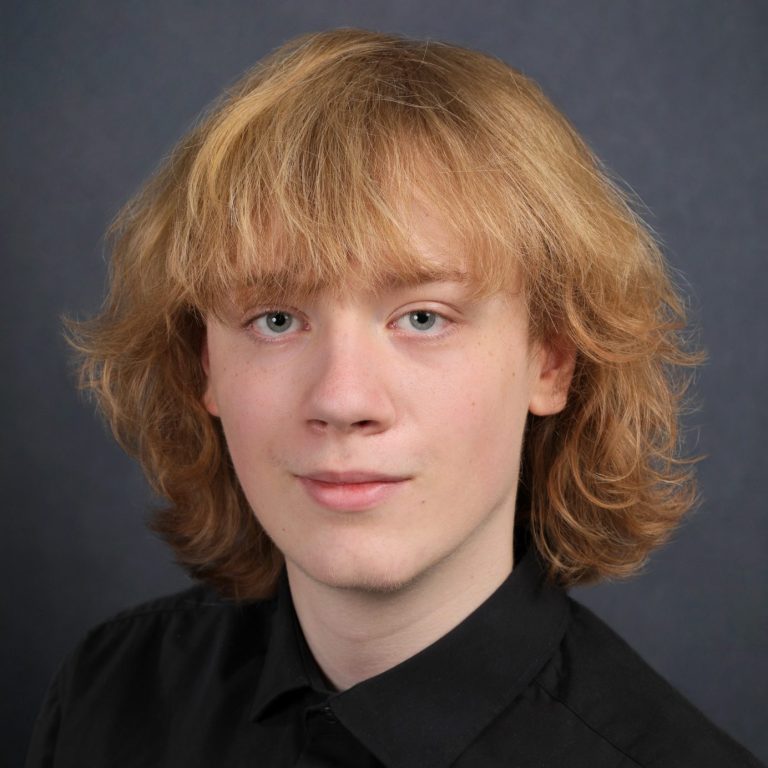
Lars Weiden
My name is Lars Weiden and I am a Game Designer specializing in Game Development, who graduated from the MDH University of Applied Science in Düsseldorf. My passion for Game Design started in my early teenage years. Be it through the writing of stories, or later through the creation and development of Minecraft Mods, in which I could freely explore my four greatest passions: Programming, Sound Design, Music and Story-Writing. Here, I also learned about other facets of Game Development, however the four I previously mentioned turned out to be my favorites and the ones I displayed the most talent in.
Over the course of my life I often started working on smaller projects using Game Engines like Unity, which, after finishing school, lead me to finding the MdH. During my studies at the MdH I continued specializing in different facets of Game Design. My specialization continued to lie in Game Engineering, however my skills in Game Design, Narrative Design and Sound Design also grew continuesly, from which I now posses a very versatile skillset in my work.
Work Experience & Academic Degrees
Bachelor of Science -
MediaDesign Hochschule Düsseldorf
2022 - 2026
Studies in Game Development, Game Design & More
My Bachelor Studies at the MediaDesign Hochschule Düsseldorf is where most my knowledge about all areas of the Game Development World come from. After learning the basics of both Art and Programming in the first semester, I specialized in Programming starting with the second semester. During my studies I learned a multitude of things.
In the Programming department I learned about Software Architecture, Shader Programming, Enemy AI, Game Physics, Engine Programming, Front- and Backend Development and more, while also gaining more knowledge in the Unity Engine, which I specialized myself in during my studies. I also learned the basics of the Godot Engine.
In the Game Design department I learned about Game Conception and Documentation, Producing, Level- & Mechanic-Design as well as pitching to a publisher.
Alongside these skills i also taught myself more about Sound Design and Engineering as well as Composing. These skills were enhanced throughout my studies, as I was the sole Sound Designer in every project I worked on.

Internship -
Stilbruch Games
2024 - 2025
Work in Unity, Weapon Systems & Sound Design
After working at CoreCraft UG for about 2 months out of my 6 month internship, I was moved to their sister-company, Stilbruch Games. Here I continued working in Unity while developing systems for their game "In Hope Voiden".
My time was equally spent developing the unique Weapon System the team had envisioned for the game, which would put a focus on the power and force behind each shot, forcing the player to think carefully before taking a shot.
After completing the Weapon System to the teams satisfaction, I started work on the Sound System for the game. Here I made use of the Sound System i had been developing for my own university projects for the last 2 years at that point and edited it to fit the standards set by the nature of the horror genre. I especially focused on 3D audio and the other devs later being able to play sounds from anywhere in the game world with ease.

Internship -
CoreCraft UG
2024 - 2025
Work in Unity & Sound Design
My univesity-mandated internship was spent at CoreCraft UG and their sister-company Stilbruch Games.
During my time at CoreCraft i continued to work in Unity and optimized the Sound System for their Game "House ALWAYS Wins!!". I also implemented the Soundtrack for the game to gradually increase in instrumentalization as the intensity of the game ramped up.

Student Job -
RWE Power AG
2022 - 2024
Work in C#, App Development & Database Management
After finishing School and starting my studies at the MdH I worked at RWE Power AG for two years in their app development department.
While working at RWE I learned a lot about Code Infrastructure and Coding Conventions. It was here where i was introduced to the ReSharper tool, which would become useful to me further on in my studies.
I also learned more about the WPF framework and developed small applications and made additions to existing ones. I also learned more about Database Management and connecting them to my WPF applications with SQL.
I also learned the basics of Machine Learning through training an agent to recognize patterns in given data and turning them into easily readable and digestable spreadsheets.

Internship -
Flying Sheep Studios
2020
Work in JavaScript & Game Design
My school madated another internship in 2020, this time spanning three weeks. At the time, I was already interested in the Game Development field, so I applied and was eventually accepted at Flying Sheep Studies, a company which has since closed down.
Here I learned the basics about how a small Game Development Team operates. I learned about the separation of departments, roles and more. During my time at Flying Sheep, I tested some of their Games with their lead Game Designer.
After the tests had concluded, I made my first self-made Game, "Vortext Warpers", using JavaScript. It was a basic Space Invaders Clone, but it introduced me to some basic concepts such as Enemy AI and Player Movement.

Internship -
adesso SE
2019
Work in Java & App Development
In 2019, my school mandated us to take part in a one-week-long internship at a company of our choosing. As I was already working on my Lands of Infinity project at the time, I chose to complete my internship at adesso, a company that also works in Java, the programming language I had gotten used to at that point.
In the internship I learned the very basics of how an IT company is run. I worked with Tech Support for a few days, i spent a few days with the System Admin team and also spent some time with the App Development team learning about how Java was used in their processes. This gave me a short but useful introduction into the world of IT.

Bachelor's Thesis - MdH University of Applied Sciences Düsseldorf
"Applied Game Engineering: On the Design of Modular PvE-Combat-Systems in Real-Time Scenarios"
(The thesis and walkthrough were made in german)
My bachelor's thesis aimed to design a modular combat system using my own definition of modularity in Game Design and illustrate the created system in the form of a playable prototype.
To achieve this, the definition of a combat and movement system as an interplay of rules and design decisions was first explained, and examples of possible combat system mechanics were provided. To further add to this, the relationship between mechanics, player skill, and feedback was explained.
To gain an overview of the various facets of a combat system, several games were analyzed for each of these facets, focusing on their implementation of these mechanics and identifying potential problems with these systems regarding player autonomy. For the facet of movement systems, the games Ghostrunner and Fortnite were analyzed, and their mechanics were compared. This revealed a direct dependency of the movement mechanics on the type of combat system and the enemies in the game. While movement in Ghostrunner is an integral part of the combat loop, in Fortnite it is merely a means of transportation between different battles with other players. To obtain examples of weapons in different combat systems, the games DOOM Eternal, Fortnite, Control, Horizon: Forbidden West, and Wolfenstein II: The New Colossus were analyzed. Each of these systems is tailored to the combat system of the respective game in its own unique way. DOOM Eternal provided insight into the weapon selection of an FPS shooter, which, however, imposes a predetermined arsenal order on the player instead of allowing them to choose it themselves. Fortnite, Horizon: Forbidden West, Control, and Wolfenstein II: The New Colossus each included special mechanics that could serve the concept of a modular combat system, which would be later used for the conception of my own system. For the final facet, player evolution, the games Ghostrunner, DOOM Eternal, and Fortnite's Demon Rush mode were compared. Each of these systems functions differently; however, Demon Rush's system, due to its reliance on a single, shared resource, was the most readily adaptable to the modular combat system.
After analyizing the different systems, the concept of modularity in relation to combat systems was defined. This definition refers to a combat system that grants the player as much autonomy and decision-making power as possible across all facets of the combat system, be it weapons, movement systems, or player evolution. With this definition in mind, the research goals were established: the design and visualization of a modular combat system in the form of a prototype.
In the following section, the modular combat system for the game Shards of Renaissance was designed using the previously analyzed games. This approach allowed for the deliberate avoidance of bugs from games like Fortnite and Ghostrunner, as well as design choices that were not well-received by players of those games. First, movement systems were designed using data from Fortnite and Ghostrunner. Subsequently, the data from the other analyzed games was adapted to the concept of modularity, resulting in the design of a single-resource weapon system with six standard weapons and two weapons from the "superweapon" category adopted from the analysis of DOOM Eternal. To control the player's strength within this system, skill trees and the durability system were developed and expanded. Ultimately, 11 enemies and two boss enemies were designed to confront the player in the developed combat system. Each enemy was intended to serve a specific purpose and offer a unique challenge.
In the final part of the bachelor's thesis, the previously designed combat system was put into practice in the form of five encounter designs. Each encounter was intended to represent a different gameplay situation and demonstrate how the modular combat system handles such situations.
The first encounter was designed to show what happens when the player has limited resources and must rely on the movement systems. This concept was supported by enemies such as the Adjudicator.
The second encounter was designed to showcase the Alchemist and demonstrate how enemies could use the player's crafting resources against them.
In the third encounter, the boss fight against the Monarch, the player is presented with an opponent who is a mirror image of him in combat strength and intelligence, forcing him to draw upon all his learned knowledge to defeat the Monarch.
The fourth encounter introduced the "Superweapons" category. In this confined level, the player has access to the most powerful weapons in the game, but is still vulnerable thanks to the chosen enemies and the player's skillful use of the weapon.
The final encounter involved the boss fight against Atlas. This encounter was designed to challenge the player's movement capabilities, as the arena itself could change due to the boss's abilities. The combat skills the player had relied on throughout the rest of the game became less important here compared to their movement abilities. This forced the player to rethink their playstyle, while still emphasizing player autonomy.
In summary, the concept of a fully modular combat system presents many design challenges for the game designer. Giving the player total control makes it nearly impossible to adequately balance the game. However, through established design philosophies, such as the Illusion of Choice or inciting Completionism in players, it is still possible to offer the player an authentic sense of modular autonomy.
In conclusion, developing a modular combat system opens up new possibilities for the game designer to provide the player with a sense of autonomy and self-determination. This can lead to new gameplay experiences that would not be possible in conventional combat systems. Therefore, the thesis not only provides an analysis of existing combat systems but also offers a new avenue for future approaches in game design and game engineering.